
Backyards in North Texas Are Not Just for Looks
In DFW, a backyard that only looks good in photos is a waste. Heat, wind, sun, kids, dogs, grills, and gatherings all put pressure on outdoor spaces. If a yard isn’t comfortable and usable, people stop going out there.
That’s why the best outdoor projects in North Texas focus on function first:
- Shade where people sit
- Solid footing where people walk
- Structure that handles weather
- Layout that makes sense for how the family lives
Decks, patios, pergolas, and retaining walls are not decoration. They are the framework that turns empty grass into real living space.
Patios vs Decks: What Works Better in DFW
Both patios and decks work well here, but for different reasons.
Patios are popular because:
- They stay cooler than wood in extreme heat
- They handle heavy furniture well
- They last with less maintenance
- They work well with pools and grills
Decks make sense when:
- The yard slopes
- The house sits higher than the yard
- Views matter
- Drainage is tricky
In North Texas soil, drainage matters more than most homeowners expect. A patio poured wrong can crack. A deck built wrong can sink. The ground decides what works best.
Pergolas and Arbors: Shade That Still Feels Open
Shade is not optional in DFW.
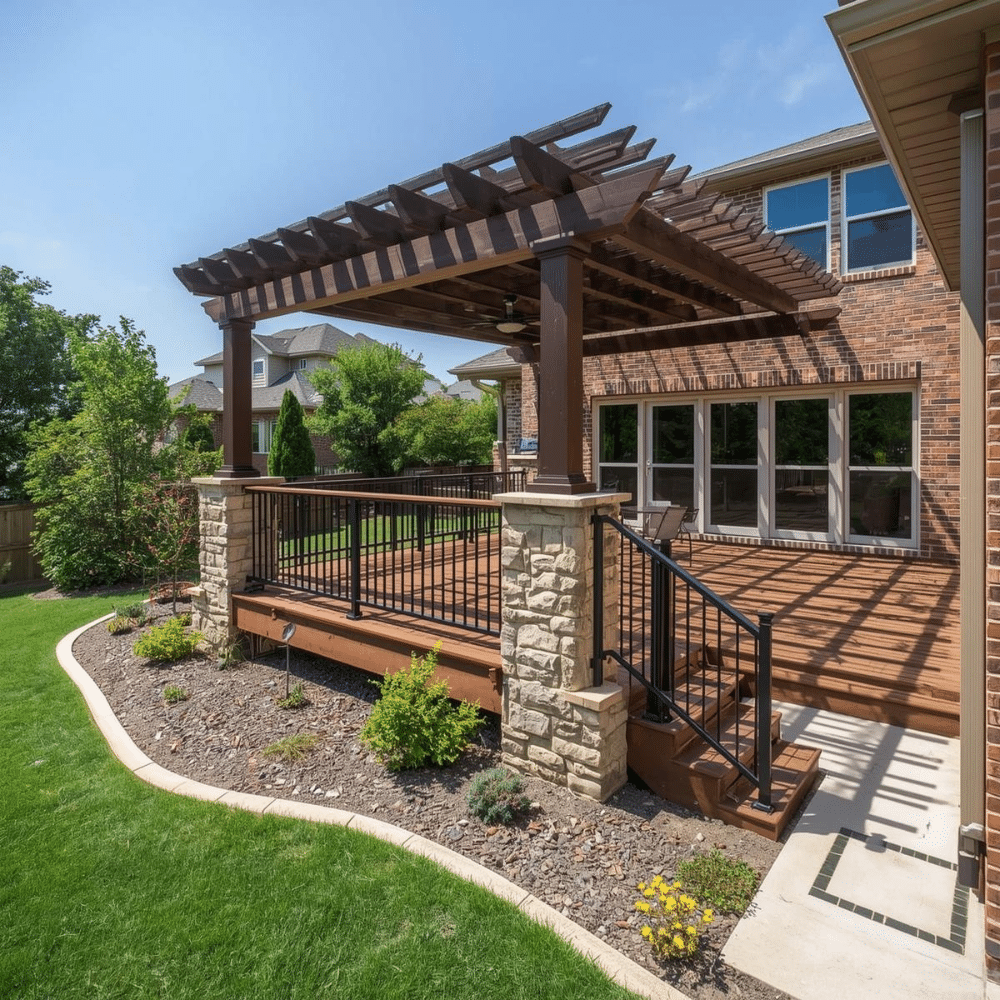
Pergolas and arbors are popular because they:
- Break direct sun without closing the space
- Add structure to open yards
- Create visual anchors for patios and decks
- Support vines, lights, and fans
In North Texas, pergolas need:
- Deeper footings
- Stronger posts
- Proper spacing for wind
Lightweight structures don’t last here. Real pergolas are built like outdoor rooms, not garden toys.
Retaining Walls: The Backbone of Sloped Yards
Many DFW neighborhoods are not flat. Builders shape lots quickly, and homeowners inherit drainage problems.
Retaining walls solve:
- Erosion
- Uneven yards
- Water flow issues
- Limited usable space
A retaining wall is not just stacked blocks. It needs:
- Proper base
- Drainage behind it
- Reinforcement
- Correct height planning
When done right, it turns unusable slopes into flat, functional areas for patios, decks, or play space.
How These Structures Work Together
The best backyards are layered.
A strong layout might include:
- A patio near the house for cooking and seating
- A pergola over part of that space for shade
- A deck stepping down to another level
- Retaining walls creating flat zones
This kind of design:
- Controls water
- Creates flow
- Adds usable square footage
- Increases home value
Random add-ons rarely work. Planning everything together changes the result completely.
What Usually Goes Wrong
Most bad outdoor projects fail for the same reasons:
- No drainage planning
- Shallow footings
- Weak posts
- Ignoring soil movement
- Building for looks instead of use
In DFW, these mistakes show fast. Cracks, sinking, leaning, and warped boards don’t take years. They take seasons.
How We Build Outdoor Spaces That Hold Up
When we build patios, decks, pergolas, and retaining walls, we plan around how North Texas behaves.
We focus on:
- Soil movement
- Drainage paths
- Heat exposure
- Wind load
- Daily use patterns
We design spaces for:
- Cooking
- Sitting
- Playing
- Entertaining
- Relaxing
Not just for photos.
A Backyard Should Invite You Outside
If you don’t want to sit out there, something is wrong.
The right structure makes you:
- Use the yard more
- Entertain more
- Relax more
- Enjoy your home more
That only happens when decks, patios, pergolas, and retaining walls are built for real life, not just for looks.


Request a Quote Today
Don't tackle this project alone. Our DFW fence team is ready to listen to what you need and walk you through your options. We offer clear, honest guidance so you can choose the right fence for your home and your budget. Call us today at (214) 551-0711 or fill out the simple form below. Our team will get back to you right away.